Friday, December 12, 2008

Favourite Links


BLOGS OF AUTHORS OF HISTORICAL FICTION

Anita Davison

Anita Davison - The Disorganised Author

Anne Whitfield

Brandy Purdy

Christopher Gortner

Elizabeth Chadwick

Elizabeth Chadwick - Living The History

Gemini Sasson - My Dog Ate My Manuscript

Gemini Sasson Website

Jeanne Kalogridis - History is a Bitch

Kimberly Eve

Leslie Dicken

Saint Joan of Arc

Lisa Yarde

Lisa Yarde - The Brooklyn Scribbler

Margaret Tanner

Marina Fiorato

Michelle Moran - History Buff

Ronald W. Adams

Rosemary Morris

Sandra Gulland

Susan Higginbotham - Reading Raving and Ranting by a Historical Fiction Writer

Tristi Pinkston

Wendy Laharnar


* * *


BLOGS ABOUT BOOKS

Book Mooch

CLEWS

Historical Novel Review

Historically Obsessed

Historical Novels

Historical Romance Club

Historical Saga Novels

Luckee Reviews

Muse-In-The-Fog

Reading The Past

Risky Regencies

17th Century Research

Unusual Historicals

Word Wenches

Yesterday Revisited


* * *


BLOGS ABOUT HISTORY

Antiquarian's Attic

Castles For Sale

Curious Expeditions

Damn Interesting

Dr. Fong's House of Mystery

Dust Bowl Stories

Doubletake

Dump Diggers

Echoes of History

Executed Today

Food History

Gothic Tea Party

Historical Boys

Historical Tapestry

Infamous New York Real Estate

Kitchen Retro

Lights Camera History

Lost Fort

Medievalists

Metropolitan Museum of Art

Medieval History

November Obscura

Odin's Castle

Passages to the Past

Raucous Royals

Royal Anecdotes

Tea at Trianon

The Critical Times

The Old Foodie

The Modern Historian

The Victorian Era

The Victorian Peeper

The Virtual Dime Museum

Tudor History

Wednesday's Attic

Wonders and Marvels


* * *


BLOGS ABOUT ITALY

2 Baci

Amore Senza Confini

Becoming Italian

Becoming Italian Word by Word

Best of Italy

Bleeding Espresso

Delicious Italy

Engrammi

Feast of the Seven Fishes

Fiordizucca

Francescav

Italia Mia Lodge

Italian American Girl

Italian Pride

Italy From The Inside

Italyville

Lost in Sicilia

Recipes Most Wanted

Roby Santini

Rues Kitchen

Seven Fishes Blog

That's Arte

The Espresso Break

Under An Olive Tree


* * *


BLOGS ABOUT WOMEN

Blogamama

Blogging Women

Enchanted by Josephine

History and Women

History Hoydens

History Undressed

Hoydens and Firebrands

Maid of Heaven

Marie Antoinette Gossip Guide

Robins Egg Bleu

Scandalous Women

Slip Into Something Victorian

StarSeeker Connection

Tattered Fabric: Fall River's Lizzie Borden

Women of History

Writer of Queens


* * *


BLOGS ABOUT WRITING

The Bookshelf Muse

Historical Fiction Writer's Critique Group

HisFic Critique Group

History into Fiction

Inspiration for Writers

Medieval Fiction Writers Critique Group

Plot Whisperer

Pub Rants

Query Shark

Seventh Sanctum

You Write On

Writer's Daily Grind

Writer's Medical and Forensic Lab

Writing the Renaissance

Future Books

A Scarlet Mantle
Mathilde of Ringelheim
Book 1
Women of the Ottonian Empire Series


Blessed with the gift of prophecy through dreams, Mechthild of Ringelheim knows she is destined to rise to great heights.

When she marries Heinrich Liudolfing she enters the dazzling, and sometimes treacherous world of the German court.

The turbulent clashes and personal destinies of the people caught in this medieval tale are magnificently interwoven in this sweeping novel of power and passion, loyalty and lies.


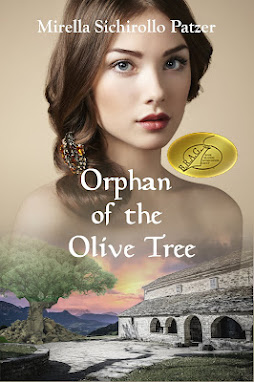
ORPHAN OF THE OLIVE TREE


In Medieval Italy, scandal and slander rip apart two families.

Dark secrets, long buried, threaten to destroy life-long friendships.

Twin daughters are separated at birth.

One will live a life of privilege.

The other is abandoned in an olive tree to live a life of humility in a monastery.

Fate intervenes and the truth will be exposed.

A story of a destiny that demands to be discovered!


The Blighted Troth


In 18th century New France, one man and one woman's wedding is prevented and their lives are in danger when an infamous, dangerous overlord threatens anyone who performs their marriage.

Books


COMING SOON
FROM ETERNAL PRESS


A lost ancient treasure. A 100 year family feud. A woman who must choose between two men: one bound by a dying wish, the other bound by desperation. And a passion richer than the bloodstone pendant she wears around her neck.

In medieval Italy, as spirited and stalwart as any man, the brazen Countess Morena is betrothed to the impoverished, black-hearted Count Ernesto; a man desperate to escape his mounting gambling debts by marrying her and laying claim to the ancient treasure secreted somewhere in the underbelly of her castle. Morena meets her match when Amoro, the handsome and brash heir to the Duchy of Genoa, swears an oath upon his father’s grave to claim her as his bride and end the feud between their families. Soon, Amoro’s virile charm awakens the passion in her steadfast heart. But a treacherous plot ensnares them; Ernesto abducts Morena and renders Amoro helpless. Embroiled in a life-and-death chase, Morena learns that not even the devious madness of her captor can destroy her love for Amoro as their hearts unite and their destinies become one.


HEINRICH THE FOWLER


Tenth-century Germany is a divided country, ever at the mercy of its ruthless, power-hungry dukes.

Then Heinrich, Duke of Saxony and Thuringia, meets the virtuous Countess Matilda of Westphalia. Reluctant to wed at first, Matilda slowly grows to love her charismatic and courageous husband who dreams of one day uniting Germany and becoming king.
But as Heinrich's attentions turn again and again to waging war upon the enemy Magyars and growing ever more powerful, turmoil plagues him and he is charged with treason.

With a death sentence upon his head, Heinrich fights back until a twist of fate helps him realize his ultimate dream.

The turbulent clashes and the personal destinies of the people caught in this medieval tale are magnificently interwoven in this sweeping novel of power and passion, loyalty and lies.

Amidst bloody wars, scheming dukes, towns under siege, and virtuous women, Heinrich and Matilda conquer the world of their times. History and fiction combine to bring to life this tangled, tempestuous era.


MAMMA MIA: GOOD ITALIAN GIRLS TALK BACK


Growing up an Italian woman in the New World sometimes involves the keeping of secrets, the telling of lies, and the patience of a saint.

In 25 stories, 18 women share their tales of rememberance and resistance - some comic, some tragic, some nostaligic, all true.

Their voices echo from coast to coast, across generations, and across the Atlantic as they talk about living a double life with a private/public split personality.
Intimate, inspiring, brave, and confssional, their words reveal women old enough to reminisce yet young enough to revolutionalize.

Balancing between the Old Country and the new, a respect for tradition and the need to break with it, this collection is a rare and surprising blend of humour and candor that promises the perfect conversation starter at the next wedding, funeral, or book club.

Mamma mia, what will they dare say next?

Saturday, December 6, 2008

The mysterious tale of Lizzie Borden

Lizzie Borden took an axe
And gave her mother forty whacks
And when she saw what she had done
She gave her father forty-one


Even to this very day, the horrific tale of Lizzie Borden is still talked about.

Lizzie Borden was born in Fall River, Massachusetts on July 19, 1860. When she was three years old, her mother Sarah Borden died, leaving both Lizzie and her elder sister, Emma motherless. Their father, Andrew Borden, soon remarried a woman named Abby Durfree Gray in 1865 and the newly formed family lived a relatively quiet life in their home on 92nd Street.

Lizzie and Emma grew to womanhood. Lizzie was a strong churgoer and taught Sunday School, belonged to Church organizations, and even travelled a little. Lizzie Borden's father was a hard working man and had acquired a significant amount of wealth, but he was stingy with his money, spending little, even refusing to add modern plumbing to their relatively nice home of decent size.

In 1884, Andrew bought his wife's half-sister a home. This incensed the two sisters who objected vehemently. Conflict within the home escalated. The siblings fought with their stepmother and referred to her as "Mrs. Borden" instead of "mother".

In an effort to eliminate the growing hostility between his daughters and his wife, Andrew gave Lizzie and Emma some money of their own and permitted them to rent out his old family home. But tension between the three women continued to grow. When some thefts were discovered from Andrew and Sarah's bedrooms, each member of the family bought and installed locks for all their bedroom doors.

In July of 1892, Lizzie and Emma went to visit some friends. Lizzie returned soon thereafter, but Emma remained. During the same time, Lizzie's uncle, the brother of her deceased mother, came to stay at the house for a visit. In early August, Andrew and Abby fell ill with an attack of vomiting. Abby confided to a friend that she suspected someone had poisoned her. On August 4, Lizzie's uncle and father went into town together. Andrew returned home without his brother-in-law and and lay down for a nap in the sitting room.

The family's maid was also taking a nap at this time and was awoken by Lizzie who urged her to come downstairs. Lizzie's father had been murdered, hacked in the face and head with an axe or hatchet. Lizzie said it happened while she was in the barn. The doctor was sent for. Upon his arrival, they discovered Abby dead in a bedroom, also hacked numerous times.

Andrew died without a will, therefore the entire estate, worth between $300,000 to $500,000, would go to Lizzie and Emma and not to Abby's heirs.

When evidence revealed that Lizzie had tried to burn a dress several days after the murder and that she'd tried to purchase poison, Lizzie Borden was arrested even though there was no bloodstained clothing found and only a washed, very clean hatchet made to look dirty was discovered in the cellar.

The widely publicized trial of Lizzie Borden commenced June 3, 1893 and popular opinion as to her innocence or guilt was split. Some Massachusetts feminists wrote in Lizzie Borden's favor and other townsfolk vehemently voiced their anger at her guilt.

Lizzie Borden never testified because she was adamant she had been in the barn searching for fishing equipment and eating pears outside while the murders were occuring. She insisted that she was innocent and kept her silence and allowed her lawyer to speak on her behalf.

Lack of direct evidence failed to convince the jury of her guilt and she was acquitted on June 20, 1893.

Afterwards, Lizzie continued to live in Fall River, but bought and lived in a new, much bigger home called "Maplecroft". She called herself Lizbeth instead of Lizzie. She and Emma lived in their new home together until they argued sometime in 1904 or 1905. Lizzie and Emma owned many pets, and left their estates to the Animal Rescue Leauge.

Lizzie Borden died at Fall River, Massachusetts, in 1927. She never outlived her notorious reputation as a murderess. She was buried next to her father and stepmother. The home in which the murders took place was turned into a bed-and-breakfast in 1992 and is now a popular tourist spot.

Omerta by Mario Puzo


Omerta is the final novel in a trilogy about the Mafia. It was written during the last three years of Mario Puzo's life. The first novel in the trilogy was The Godfather in which Puzo introduced us to the Corleone family. The second novel, The Last Don, is about the rise and fall of the brutal Clericuzio family. Omerta concludes the trilogy by depicting the Aprile family who struggle to escape the stronghold of the Mafia way of life.

The book is fast paced and takes the reader through many twists and turns. As with all of Mr. Puzo's books, they are full of drama, betrayal, and intrigue. Mario Puzo became famous in literature and in Hollywood for his stories of the Mafia. I have always enjoyed his stories and will sorely miss him.

Here is the summary of the book as it is written on the book jacket:

Don Raymonde Aprile is an old man wily enough to retire gracefully from organized crime after a lifetime of ruthless conquest. Having kept his three children at a distance, he's ensured that they are now respectable members of the establishment: Valerius is an army colonel who teaches at West Point, Marcantonio is an influential TV network executive, and Nicole is a corporate litigator with a weakness for pro bono cases to fight the death penalty. To protect them from harm, and to maintain his entrée into the legitimate world of international banking, Don Aprile has adopted a "nephew" from Sicily, Astorre Viola, whose legal guardian made the unfortunate decision to commit suicide in the trunk of a car. Astorre is an unlikely enforcer--a macaroni importer with a fondness for riding stallions and recording Italian ballads with his band.

Though Don Aprile's retirement is seen as a business opportunity by his last Mafia rival, Timmona Portella, it is viewed with suspicion by Kurt Cilke, the FBI's special agent in charge of investigating organized crime. Cilke has achieved remarkable success in breaking down the bonds between families, cultivating high-ranking sources who in return for federal protection have violated omerta--Sicilian for "code of silence," the vow among men of honor that, until recently, kept them from betraying their secrets to the authorities.

As Cilke and the FBI mount their campaign to wipe out the Mafia once and for all, Astorre Viola and the Apriles find themselves in the midst of one last war, a conflict in which it is hard to distinguish who, if anyone, is on the right side of the law, and whether mercy or vengeance is the best course of action.

Rich with suspense, dark humor, and the larger-than-life characters who have turned Mario Puzo's novels into modern myths, Omerta is a powerful epitaph for the Mafia at the turn of a new century, and a final triumph for a great American storyteller.


Mario Puzo
October 15, 1920 – July 2, 1999

By The Sword by Alison Stuart


By The Sword by Alison Stuart won the 2008 Eppie award in the historical romance category. It is the story of a young widow, Kate Ashley, who struggles to carve a life for herself and her young son during the turbulence of war in the era of Charles II. Through her late husband’s family, she inherits the impoverished mansionestate and stately home called Seven Ways in Worcestershire England. But the estate is in disrepair and to restore it will cost a great deal. Nevertheless, she perseveres.

She encounters royalist, Jonathan Thornton, who is exiled and a wanted man. Stephen Prescott, a harsh parliamentarian swears to capture the elusive Thornton and bring him to justice. But the past will not be forgotten and Jonathan faces Prescott in a deadly fight over a long lost love.

The novel begins with a powerful opening – Prescott executes a young man in Jonathan’s troop. Because of Jonathan’s involvement with the Royalists, he has lost his inheritance and his freedom as he spends his time eluding capture.

This is historical romance is well written with a strong focus on history. The foils of war are clearly portrayed and tempered with the blooming romance of Jonathan and Kate. The relationship between the characters are well developed and believable. The courage of both the heroine and hero keep the reader transfixed. It is not surprising the novel won such a prestigious award.
Related Posts Plugin for WordPress, Blogger...